
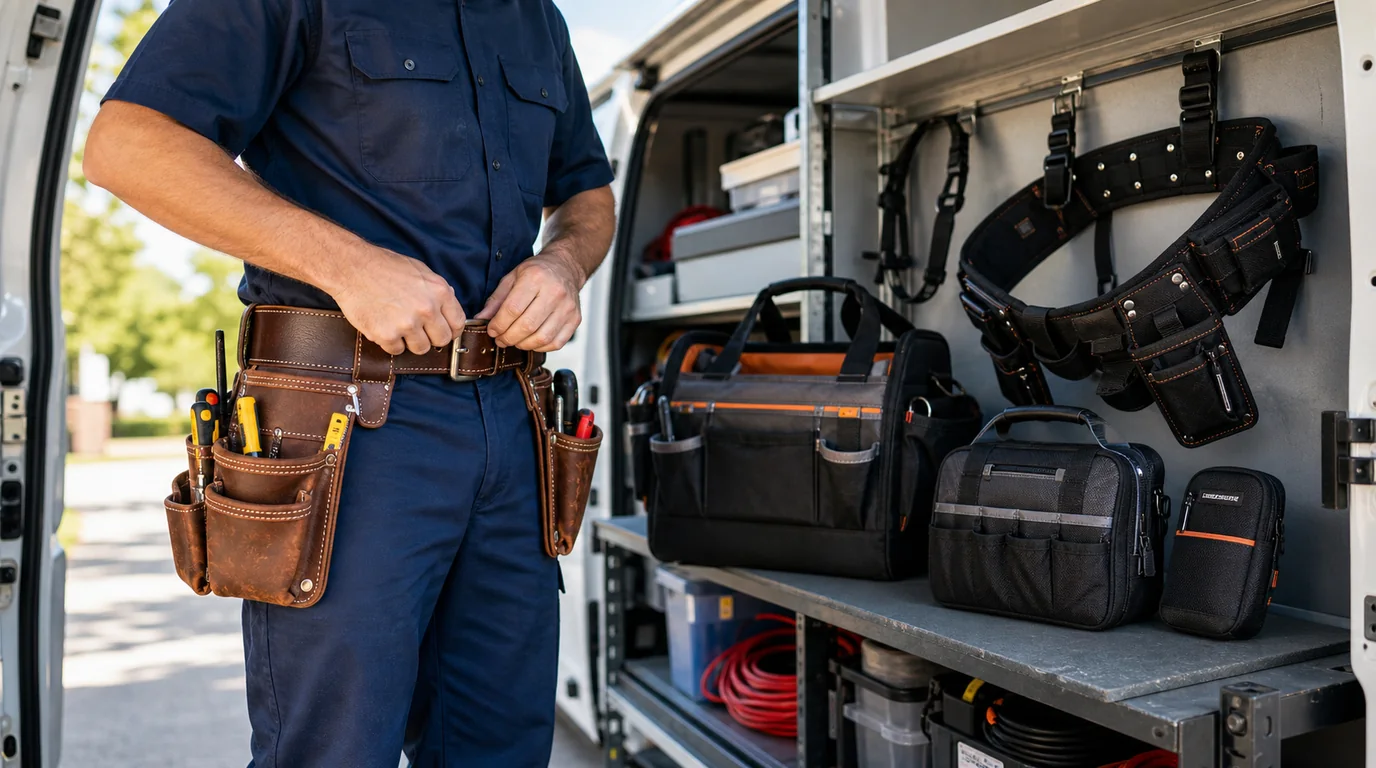
Top 11 Electrician Tool Belts and Bags Worth the Investment
Compare the top electrician tool belts and bags worth buying, with practical tips on comfort, storage, durability, ladder work, troubleshooting, and daily job use.
Key takeaways:
The right carrying setup should reduce searching and truck trips without creating unnecessary weight, pressure, or fatigue.
- Choose for the work you perform. Service calls, rough-ins, troubleshooting, ladder work, and commercial jobs place different demands on storage and access.
- Belts and bags solve different problems. A belt keeps daily tools within reach, while a structured bag carries more gear and moves easily between jobs.
- Fit and weight matter more than pocket count. Load the setup with your real tools and check balance, adjustment, movement, and comfort before committing.
- Use a modular setup when your work changes. A small daily pouch plus a separate diagnostic or specialty bag prevents every tool from riding on your body.
- Judge the purchase by time saved. Durability, organization, fewer lost tools, and fewer trips to the vehicle matter more than the lowest purchase price.
The wrong tool belt can ruin a good workday.
It digs into your hips. It slides when you climb a ladder. The pouch collapses when you reach for a tester. Your tape, screws, and wire nuts end up buried under everything else.
That gets old fast.
A good electrician tool belt or bag does not just carry tools. It keeps your most-used gear where your hand expects it to be. It protects your back, saves steps to the truck, and helps you work without stopping every five minutes to search for something small.
This guide breaks down 11 electrician tool belts and bags worth considering, plus how to choose the right setup for service calls, rough-ins, troubleshooting, ladder work, and daily residential or commercial jobs.
Pro tip from the author: “I do not choose a tool belt by pocket count alone. I care more about whether the tools I use all day are easy to reach without twisting, digging, or taking the belt off.”
Quick Answer: What Is the Best Electrician Tool Belt or Bag?
The best electrician tool belt or bag depends on the work.
For daily service work, a compact tool bag may be better than a heavy belt. For rough-in work, a full belt with strong pouches can save trips across the job site. For ladder work, comfort and balance matter more than carrying every tool you own.
Here is a quick comparison:
| Tool belt or bag | Best for | Main advantage |
|---|---|---|
| Milwaukee electrician tool belt | General daily electrical work | Lots of storage and durable pouches |
| Klein Tools lineman belt | Utility and heavy-duty work | High weight capacity and rugged build |
| Rack-A-Tiers combo belt and bag | Electricians who want support and airflow | Hybrid design with large pockets |
| LAUTUS leather tool pouch | Light-duty work | Simple leather pouch for essential tools |
| Occidental Leather 9596 | Pros who prefer leather | Durable, premium electrician bag set |
| Gatorback B240 combo | Long days and comfort | Box-style pockets and padded support |
| Occidental Leather 5093 | Shoulder-supported carrying | Helps shift weight off the waist |
| Bucket Boss belt | Budget-friendly general use | Flexible fit and simple storage |
| DEWALT DG5543 tool bag | Electricians who prefer a bag | Large open-top storage |
| Veto Pro Pac MC bag | Troubleshooting and service calls | Compact, organized diagnostic setup |
| Python Safety holster | One-tool safety carry | Keeps one tool secure and close |
If you only buy one setup, choose the one that matches your most common work, not the most impressive one on the shelf.
Tool Belt vs Tool Bag: Which One Should Electricians Use?
Electricians often need both.
A tool belt is better when you are moving around a job site and need your hands free. It works well for rough-in, ladder work, framing-stage electrical, and tasks where you keep reaching for the same tools.
A tool bag is better when you do service calls, troubleshooting, inspections, and smaller repairs. You can carry a focused kit inside, set it down near the work area, and avoid wearing extra weight all day.
Use this simple rule:
Use a belt when you need constant access. Use a bag when you need organized transport.
Example:
If you are trimming out a whole house, a belt makes sense because you keep using strippers, pliers, drivers, fasteners, tape, and small parts.
If you are troubleshooting a dead outlet, a bag with a meter, tester, screwdriver set, flashlight, and a few parts may be easier.
Pro tip from the author: “I like having a full belt for production work and a smaller bag for service calls. Carrying the same heavy setup everywhere usually wastes energy.”
What to Look for in an Electrician Tool Belt or Bag
Before buying, think about the actual job.
A good electrician setup should help with:
- comfort
- balance
- tool access
- pocket layout
- durability
- ladder movement
- small parts storage
- phone or tablet protection
- weather resistance
- tool weight
Do not buy only for capacity.
A belt that can hold 40 tools may sound useful, but it can become a problem if it pulls on your hips all day. A bag with deep pockets may look organized until small parts disappear at the bottom.
The best setup lets you carry what you need without punishing your body.
1. Milwaukee Electrician Tool Belt
The Milwaukee electrician tool belt is a strong option for general electrical work.
It is useful when you want a lot of storage, upright pouches, and a belt that can handle daily job-site wear.
Best for:
- residential rough-in
- commercial rough-in
- trim-out work
- electricians who carry many small tools
What to like:
- many pockets
- durable material
- good structure
- room for hand tools and fasteners
- useful for high-volume work
What to watch:
If you overload it, the belt can become uncomfortable. More pockets can tempt you to carry tools you do not need.
Use it when you need a full working setup, not when you only need a meter and a screwdriver.
2. Klein Tools Lineman Belt
A Klein lineman belt is made for heavier work.
It is not the lightest option, but it is built for electricians who need strength, durability, and support in tougher environments.
Best for:
- lineman work
- utility work
- outdoor electrical work
- heavy-duty carrying
- electricians who need a rugged belt
What to like:
- strong build
- high weight capacity
- good for demanding work
- durable material
- fast on and off
What to watch:
Heavy-duty does not always mean comfortable for every electrician. If you are doing indoor service calls all day, this may be more belt than you need.
3. Rack-A-Tiers Electrician Combo Belt and Bag
The Rack-A-Tiers combo setup works well for electricians who want a mix of storage and support.
It is designed as a belt and bag hybrid, which makes it useful for carrying tools while still keeping larger pockets available.
Best for:
- electricians who want more organization
- warm job sites
- service and installation work
- people who need back support
What to like:
- large pockets
- breathable support design
- hybrid belt and bag feel
- good for mixed electrical work
- durable core construction
What to watch:
Some electricians may find certain tool slots too tight. Before committing, check whether your screwdrivers, testers, and pliers fit the way you like.
4. LAUTUS Leather Tool Pouch
A leather tool pouch is useful for lighter-duty work.
The LAUTUS pouch is a simpler setup for electricians who do not want a full belt but still need a few essentials close.
Best for:
- light service calls
- punch-list work
- apprentices
- quick repairs
- electricians who like leather
What to like:
- simple design
- leather construction
- enough space for common hand tools
- good for smaller jobs
- easy to carry
What to watch:
Leather can feel stiff at first. It usually breaks in over time, but it may not be comfortable on day one.
This is better for a focused kit than a full job-site loadout.
5. Occidental Leather 9596 Electrician Tool Bag Set
The Occidental Leather 9596 is a premium leather setup for electricians who want durability and a more traditional tool belt feel.
It is best for pros who carry tools daily and want the belt to mold to their work habits over time.
Best for:
- experienced electricians
- daily job-site use
- leather tool belt fans
- residential and commercial work
- pros who want long-term durability
What to like:
- high-quality leather
- professional look
- strong tool retention
- good long-term feel
- built for serious use
What to watch:
Leather can be heavier than nylon. It may also need break-in time and care.
If you work in wet conditions often, think about maintenance before buying.
Pro tip from the author: “A leather setup can be great, but I would not buy it just for looks. I want to know how it feels after a full week of real work.”
6. Gatorback B240 Electrician Combo
The Gatorback B240 is popular because of its comfort-focused design.
Its box-style pockets help smaller parts stay reachable instead of sinking into the bottom of a pouch.
Best for:
- long workdays
- electricians who carry many small parts
- rough-in work
- trim-out work
- people who care about back support
What to like:
- comfortable padding
- box-shaped pockets
- good stitching
- breathable design
- strong support
What to watch:
The bulk can be a problem in tight spaces. If you spend a lot of time on narrow ladders, in closets, or inside cramped mechanical areas, check the size carefully.
7. Occidental Leather 5093 Six-Bag System
The Occidental Leather 5093 is a shoulder-supported system.
That matters because not every electrician wants all tool weight sitting on the hips.
Best for:
- electricians with hip or lower-back strain
- longer jobs
- people who want weight distribution
- leather tool system users
- larger installation projects
What to like:
- weight spread through shoulder support
- good range of storage
- durable leather
- strong for daily use
- reduces waist pressure
What to watch:
Shoulder systems do not fit everyone the same. Taller or shorter electricians may need to adjust carefully so tools sit where they can actually reach them.
8. Bucket Boss Tool Belt
The Bucket Boss belt is a more budget-friendly option.
It is useful for electricians who need a practical belt without spending premium leather money.
Best for:
- apprentices
- budget-conscious pros
- general repair work
- backup belt use
- lighter daily work
What to like:
- affordable
- flexible fit
- simple pockets
- easy to use
- good starter option
What to watch:
Budget belts may not last as long under heavy daily use. Also check the phone pocket size if you carry a larger phone on the job.
This is a reasonable choice if you are still learning what you like in a tool belt.
9. DEWALT DG5543 16-Inch Tool Bag
The DEWALT DG5543 is a spacious tool bag rather than a belt.
It is a good option for electricians who want an open-top bag that can carry several hand tools, testers, and small parts.
Best for:
- service calls
- troubleshooting
- general repair work
- electricians who prefer bags
- carrying tools from truck to site
What to like:
- large capacity
- open-top access
- many pockets
- rubber feet
- easy to set down
What to watch:
Shoulder straps and handles take a lot of abuse. If you load the bag heavily every day, inspect the strap and stitching often.
A tool bag can become too heavy just like a belt can.
10. Veto Pro Pac MC Tool Bag
The Veto Pro Pac MC is a compact tool bag that works well for troubleshooting and diagnostics.
It is not meant to carry every tool in the truck. It is meant to carry the tools you need for focused service work.
Best for:
- diagnostic calls
- service electricians
- crawlspace work
- compact tool setups
- electricians who like organization
What to like:
- compact size
- strong organization
- good for meters and testers
- easier to carry than a full bag
- professional service-call setup
What to watch:
The smaller size is the point, but it also limits what you can carry. If you try to use it as your only bag for every job, it may feel tight.
11. Python Safety Single Tool Holster With Retractor
A single-tool holster is not a full belt or bag.
It is for keeping one important tool secure and close.
That can matter when working at height, in dark areas, or in places where dropping a tool could create a real problem.
Best for:
- ladder work
- lift work
- high-visibility job sites
- tool drop prevention
- carrying one key tool
What to like:
- keeps a tool secure
- high-visibility design
- useful in wet or outdoor work
- helps prevent drops
- simple and focused
What to watch:
It does not replace a tool belt. It solves one specific problem: keeping a tool attached and reachable.
How to Choose the Right Setup for Your Work
Start with the job type.
Different electrical work needs different carrying systems.
| Work type | Best setup |
|---|---|
| Residential service | Compact tool bag or light pouch |
| Commercial rough-in | Full belt with strong pouches |
| Troubleshooting | Organized diagnostic bag |
| Ladder work | Balanced belt or small holster |
| Low-voltage work | Compact pouch or small bag |
| Long installation days | Padded belt with suspenders |
| Apprentice work | Affordable belt with core hand tool storage |
Think about what you reach for every hour.
Your daily tools should be easy to reach. Your occasional tools can stay in the bag or truck.
If every pocket is full, the setup is probably too heavy.
Belt Weight Formula: How Heavy Is Too Heavy?
A tool belt should save time, not punish your body.
Use this simple check:
Daily carry weight = belt weight + tools + fasteners + small parts
Example:
- Belt: 4 pounds
- Hand tools: 8 pounds
- Tester and meter: 2 pounds
- Fasteners and parts: 3 pounds
Total daily carry weight:
4 + 8 + 2 + 3 = 17 pounds
That may be fine for short periods, but it can feel heavy after a full day.
If your belt regularly passes 20 pounds, consider removing rarely used tools or adding suspenders.
Pro tip from the author: “I like to empty the belt at the end of the week. If I did not use a tool all week, I ask whether it really belongs on my waist.”
Tool Bag Payback Formula
A good belt or bag should save time.
Use this formula:
Payback period = tool bag cost / monthly labor time saved
Example:
A compact diagnostic bag costs $220.
It saves 15 minutes per service call because your meter, tester, bits, labels, and small parts stay organized.
You run 20 service calls per month.
Time saved:
20 calls x 15 minutes = 300 minutes
That equals:
300 minutes / 60 = 5 hours
If your billable rate is $100 per hour:
5 hours x $100 = $500 in monthly time value
Payback:
$220 / $500 = less than 1 month
That is why organization matters. The bag does not need to be fancy. It needs to stop wasted time.
What Should Apprentice Electricians Buy First?
Apprentices do not need the most expensive belt on day one.
Start with a setup that holds basic tools without becoming too heavy.
A good apprentice setup should carry:
- wire strippers
- lineman’s pliers
- diagonal cutters
- insulated screwdrivers
- tape measure
- pencil or marker
- non-contact voltage tester
- small flashlight
- electrical tape
- a few small parts
Avoid buying a huge premium belt before you know the kind of work you will do most.
If you later move into commercial rough-in, you may want a bigger belt. If you move into service work, a compact diagnostic bag may be smarter.
How to Keep Belts and Bags From Wearing Out Too Fast
Tool belts and bags wear out when they are overloaded, dragged around, soaked, or filled with sharp tools in the wrong pockets.
Make them last longer by:
- cleaning out debris weekly
- removing tools you do not use
- keeping sharp tips in protected slots
- drying leather after wet jobs
- checking stitching and rivets
- replacing damaged pouches early
- keeping fasteners in small containers
- not using the phone pocket as a screw bin
Small care habits matter.
A belt that lasts three years instead of one saves money and keeps your setup familiar.
Common Mistakes When Buying Electrician Tool Belts and Bags
Avoid these mistakes:
- buying only because of brand name
- choosing the biggest belt available
- ignoring comfort
- carrying too many tools
- buying leather without wanting to maintain it
- using a service bag for rough-in work
- using a full belt for every small call
- not checking phone or meter pocket size
- ignoring ladder clearance
- forgetting suspenders for heavier setups
The best setup is the one you can wear or carry all day without fighting it.
Final Takeaway
A good electrician tool belt or bag should make the work easier.
It should keep your tools organized, protect your body, and help you move through the job without constant trips back to the truck.
Choose a full belt for rough-in and production work.
Choose a compact bag for troubleshooting and service calls.
Choose a pouch or holster when you only need a focused set of tools close by.
Do not buy the biggest setup just because it holds more.
Buy the setup that matches the work you actually do, keeps your most-used tools easy to reach, and still feels reasonable after a full day on site.